
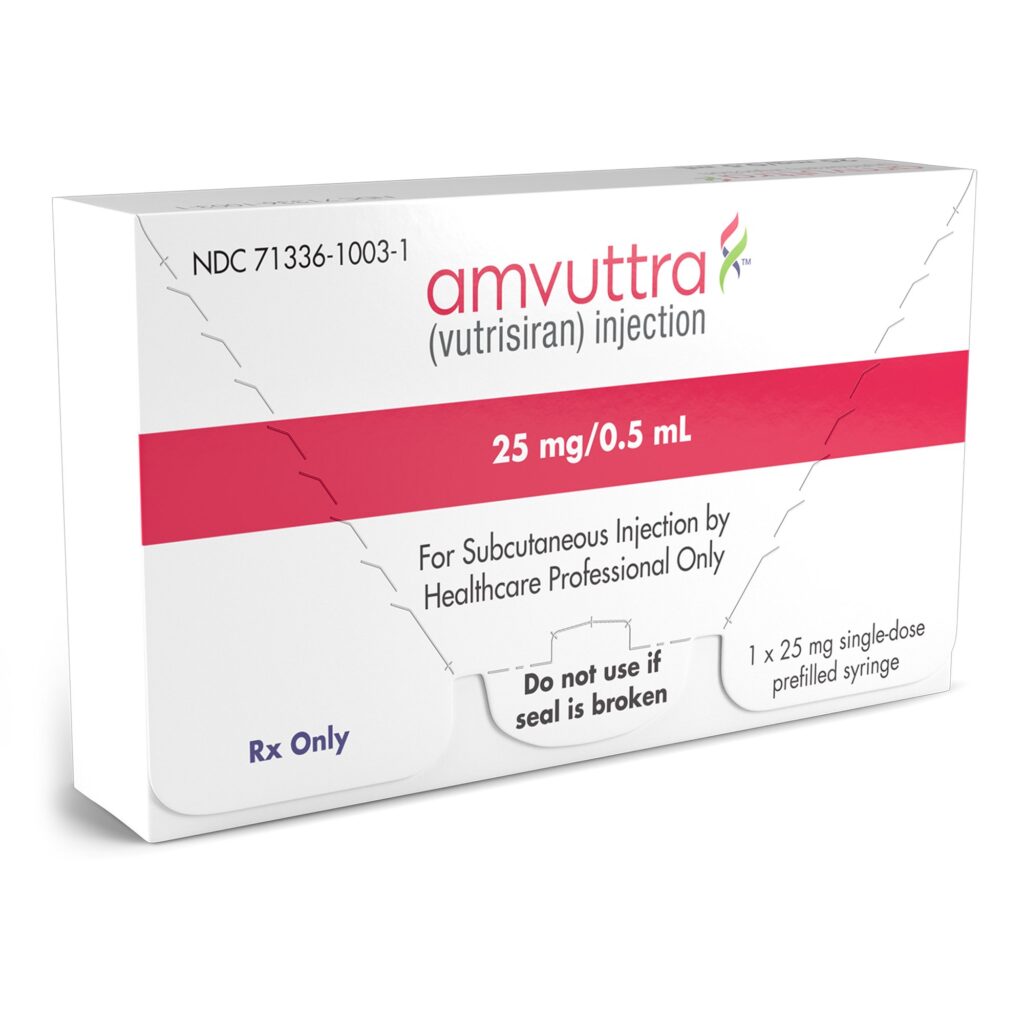
Amvuttra
(vutrisiran)
Provider Summary
Primary Uses
Hereditary transthyretin-mediated amyloidosis (hATTR) with polyneuropathy in adults per label and clinical criteria.
Mechanism of action
siRNA that reduces hepatic production of transthyretin (TTR), lowering circulating TTR and slowing neuropathy progression.
Pre-treatment / baseline requirements
Baseline neurologic assessment; review hepatic function and nutritional status. Because therapy lowers serum vitamin A levels, vitamin A supplementation at recommended daily allowance is advised; assess visual symptoms at baseline and during therapy.
Common side effects
Arthralgia, dyspnea, decreased vitamin A levels (and related symptoms), injection-site reactions, pain in extremities.
Serious adverse effects / key risks
Hypersensitivity; potential ocular complications from low vitamin A if not supplemented; other risks per PI.
Clinical notes
Patient education should emphasize vitamin A supplementation and reporting night vision changes.
Referral requirements
Standard infusion referral form + drug-specific checklist
Patient & Caregiver Education
What it treats
Hereditary transthyretin-mediated amyloidosis with polyneuropathy in adults
How it works
Uses RNA-interference to reduce a disease-driving protein made by the liver.
Before treatment
Tell your clinician if you have an active infection/fever, are pregnant/planning pregnancy, or have major heart/nerve problems. Depending on the medication, you may need labs or screening tests (e.g., TB/hepatitis) and a vaccine review.
Common side effects
Arthralgia, dyspnea, decreased vitamin A levels, injection-site reactions, pain in extremities.
Get urgent help for
Hypersensitivity; potential ocular complications from low vitamin A if not supplemented; other risks per PI.
On treatment day
Plan to stay for monitoring. If you feel dizzy, drowsy, or unwell afterward, do not drive and follow your clinician’s instructions.