
Provider Summary
Primary Uses
Relapsing and primary progressive multiple sclerosis in adults per label/payer criteria.
Mechanism of Action
Anti‑CD20 monoclonal antibody → B-cell depletion.
Pre-treatment / Baseline Requirement
Hepatitis B virus screening prior to first dose; review immunization status and administer needed vaccines before therapy when feasible; baseline CBC and quantitative immunoglobulins are commonly obtained; screen for active infection; premedication for infusion reactions per PI.
Common side effects
Infusion reactions, upper respiratory infections, skin infections, headache.
Serious adverse effects / key risks
HBV reactivation; serious infections; malignancy risk (including breast cancer signal in trials); PML (rare); severe infusion reactions
Referral requirements
Standard infusion referral form + drug-specific checklist
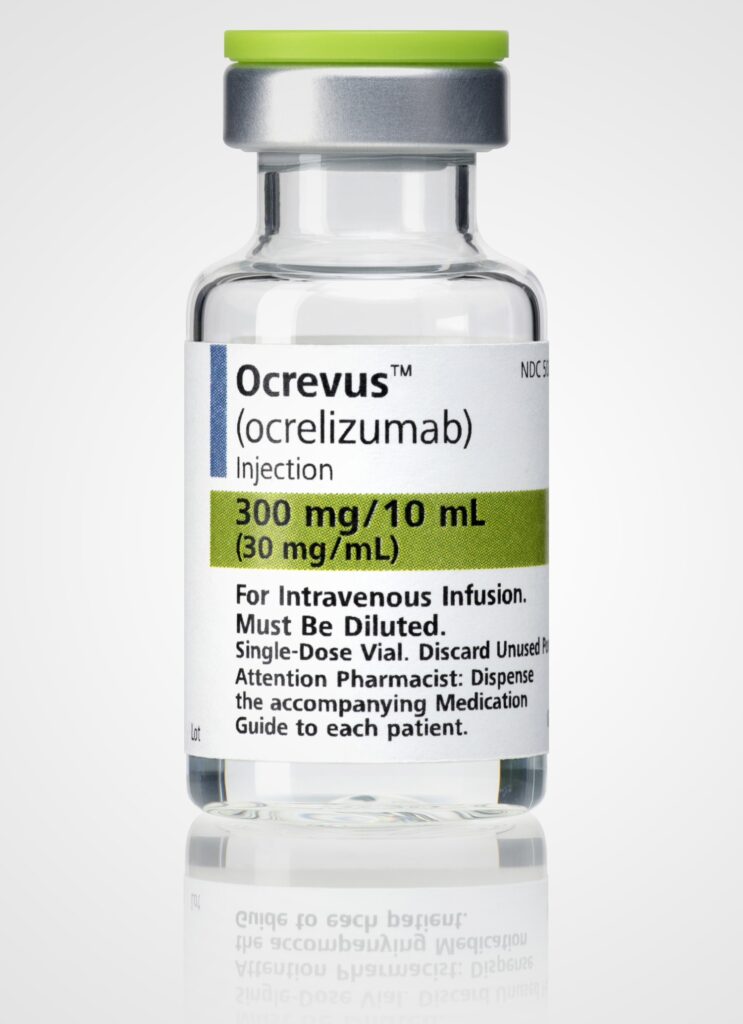
Patient & Caregiver Education
What it treats
Relapsing and primary progressive multiple sclerosis in adults
How it works
Targets CD20 on B-cells to reduce harmful immune activity.
Before treatment
Tell your clinician if you have an active infection/fever, are pregnant/planning pregnancy, or have major heart/nerve problems. Depending on the medication, you may need labs or screening tests (e.g., TB/hepatitis) and a vaccine review.
Common side effects
Infusion reactions, upper respiratory infections, skin infections, headache.
Get urgent help for:
HBV reactivation; serious infections; malignancy risk; PML; severe infusion reactions.
On treatment Day:
Plan to stay for monitoring. If you feel dizzy, drowsy, or unwell afterward, do not drive and follow your clinician’s instructions.